

The steam rises from a makeshift food cart in Itaewon.
Park Saeroyi stands behind the counter, sleeves rolled up, stirring a bubbling pot of crimson sauce and chewy rice cakes. It’s his first night. The rent is due. His father’s dream—and his own revenge—depends on what happens in the next few hours.
A group of office workers approaches, ties loosened, looking for something to soak up the soju. They don’t know who he is. They don’t know what he’s been through. All they know is the smell: sweet, spicy, utterly irresistible.
“Tteokbokki juseyo,” one of them says. Give me tteokbokki.
Saeroyi ladles out a portion with the focus of a man who has practiced this moment a thousand times in his head. The rice cakes glisten. The sauce clings perfectly.
This is how empires begin. One rice cake at a time.
The Soul of Korean Street Food
Itaewon Class (이태원 클라쓰, 2020) isn’t just a drama about revenge and business. It’s a love letter to the Korean dream—the belief that with enough determination, anyone can rise from nothing. And at the heart of that journey sits tteokbokki (떡볶이), the most beloved street food in Korea.
You’ll find tteokbokki everywhere in Seoul: at pojangmacha (street food tents), in school zones, at train stations, in convenience stores. It’s the food students eat after hagwon (cram school). It’s what office workers crave at midnight. It’s comfort, nostalgia, and a little bit of fire—all in one bowl.
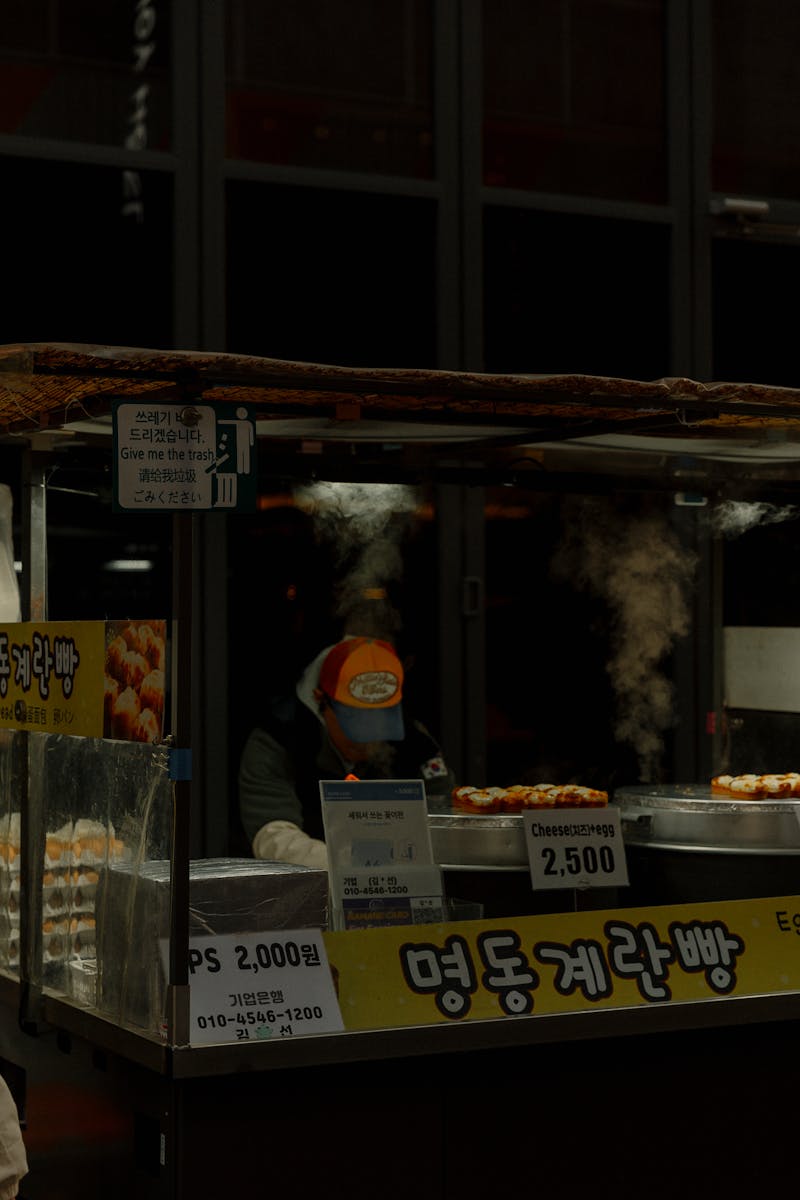 The glow of a pojangmacha—where dreams and rice cakes come together
Understanding Tteokbokki: More Than Just Spicy Rice Cakes
The name breaks down simply. Tteok (떡) means rice cake. Bokki (볶이) means stir-fried. But calling tteokbokki “stir-fried rice cakes” misses the soul of the dish entirely.
Modern tteokbokki is actually braised more than stir-fried, swimming in a sweet-spicy sauce that defines Korean street food. The cylindrical rice cakes—called garae-tteok—have a uniquely chewy texture that’s almost bouncy. Bite through that exterior, and you hit the soft, slightly sticky interior that absorbs all that glorious red sauce.
The Flavor Formula
| Element | Purpose | Korean Term |
|---|---|---|
| Gochugaru | Smoky heat | 고추가루 |
| Gochujang | Fermented depth | 고추장 |
| Sugar | Balance and glaze | 설탕 |
| Soy Sauce | Umami backbone | 간장 |
| Fish Cake | Savory contrast | 어묵 |
The magic ratio varies by vendor, but the principle stays constant: tteokbokki should be sweet enough to keep you eating, spicy enough to make you reach for water, and addictive enough to order a second portion.
The Recipe: Saeroyi’s DanBam Tteokbokki
Ingredients
The Rice Cakes
- 500g Korean rice cakes (garae-tteok), cylindrical shape
- If frozen, soak in warm water for 30 minutes before cooking
The Sauce
- 2 tablespoons gochugaru (Korean red pepper flakes)
- 1 tablespoon gochujang (Korean red pepper paste)
- 2 tablespoons soy sauce
- 2 tablespoons sugar (or Korean corn syrup for shine)
- 1 tablespoon minced garlic
The Broth
- 3 cups anchovy-kelp broth (or 3 cups water + 1 tsp dashi powder)
- 2 dried anchovies + 1 piece dried kelp (if making fresh broth)
Additional Ingredients
- 150g Korean fish cakes (eomuk), sliced into triangles
- 2 hard-boiled eggs (optional but traditional)
- 2 green onions, cut into 2-inch pieces
- 1/4 cabbage, roughly chopped (optional)
Equipment
- Wide, shallow pan or pot
- Wooden spoon or spatula
- Serving bowls
Step-by-Step Instructions
Step 1: Prepare the Rice Cakes
If using frozen rice cakes, soak them in warm water for 20-30 minutes until softened. Fresh rice cakes can be used directly.
Saeroyi’s Note: The quality of your rice cakes matters more than anything else. Cheap, overly processed ones turn mushy. Find a Korean grocery store that sells fresh or properly frozen garae-tteok.
Step 2: Make the Broth (Optional but Better)
For authentic flavor, simmer 3 cups of water with dried anchovies and kelp for 10 minutes. Remove the solids. This broth adds depth that water alone can’t provide.
If pressed for time, use water with a teaspoon of dashi powder. It works.
Step 3: Mix the Sauce
In a small bowl, combine:
- Gochugaru
- Gochujang
- Soy sauce
- Sugar
- Minced garlic
Mix until it forms a smooth paste. This is your flavor foundation—taste it. It should be intensely sweet-spicy-savory.
Step 4: Build the Dish
Pour your broth into a wide pan over medium-high heat. Add the sauce mixture and stir until dissolved.
Bring to a boil, then add:
- Rice cakes first (they need the most time)
- Fish cakes
- Cabbage (if using)
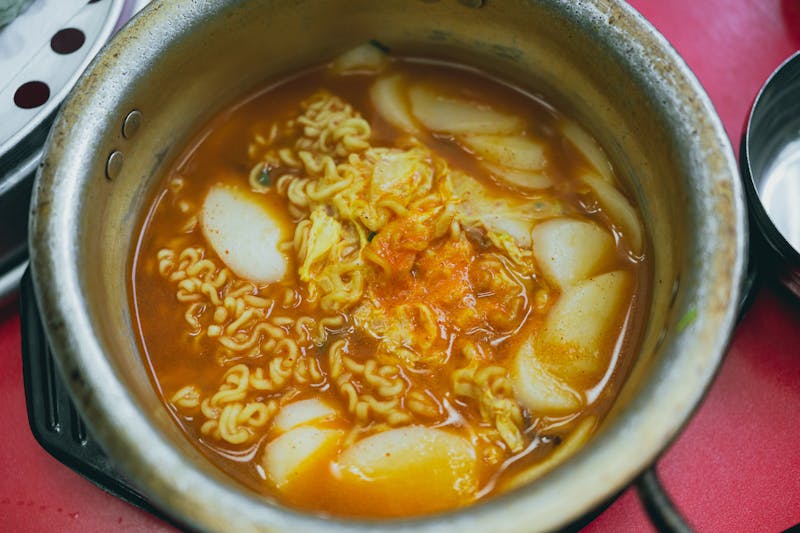 The transformation begins—rice cakes absorbing that signature red sauce
Step 5: The Crucial Simmer
Reduce heat to medium. Let everything simmer for 8-10 minutes, stirring frequently. The rice cakes will gradually absorb the sauce and the liquid will reduce into a thick, glossy coating.
Watch carefully—tteokbokki can go from perfect to burnt quickly. If the sauce reduces too fast, add a splash of water.
Step 6: Final Touches
When the rice cakes are soft and chewy (not mushy), and the sauce clings to everything in a glossy coat:
- Add green onions
- Stir for 30 more seconds
- Remove from heat immediately
Add hard-boiled eggs if using—they’re traditional and soak up the extra sauce beautifully.
Step 7: Serve Hot
Tteokbokki is served family-style, directly from the pan. Give everyone a bowl and let them serve themselves. The rice cakes should be eaten while hot—they harden as they cool.
Pro Tips from Korean Street Food Vendors
The Rice Cake Rule
Never let rice cakes sit in sauce for too long before serving. They continue absorbing liquid and become mushy. Make tteokbokki right before eating.
The Heat Balance
Korean street food is spicy, but it shouldn’t be painful. If your sauce is too hot, add more sugar. If it’s too sweet, add a bit more gochugaru. Balance is everything.
The Dipping Partner
Tteokbokki is traditionally paired with sundae (Korean blood sausage) or fried foods like twigim (tempura vegetables). But the classic pairing is simply more tteokbokki.
The Leftover Transformation
If you have leftover sauce (without rice cakes), use it as a base for tteok-ramyeon—add instant noodles to the remaining sauce with fresh rice cakes. It’s called rabokki and it’s even more addictive.
FAQ
What does tteokbokki taste like?
Sweet, spicy, and deeply savory. The rice cakes themselves are neutral and chewy—almost bouncy in texture. The sauce does all the flavor work, coating each piece in a glossy, addictive red glaze that balances sugar and heat.
Is tteokbokki very spicy?
By Korean standards, it’s moderately spicy—approachable but with presence. For Western palates, it can be quite hot. You control the heat through the amount of gochugaru. Start with half if you’re sensitive to spice.
What are Korean rice cakes made of?
Traditional garae-tteok is made from glutinous rice flour and water, steamed and extruded into cylindrical shapes. The result is a uniquely chewy texture that’s different from any Western equivalent.
Can I make tteokbokki vegetarian?
Yes. Skip the fish cakes and use vegetable broth instead of anchovy broth. The gochujang should be checked for fish products (some brands contain anchovy). The dish is equally delicious without animal products.
Why do my rice cakes turn hard?
They’ve either been overcooked and then cooled, or they were poor quality to begin with. Fresh or properly thawed rice cakes should stay chewy for the duration of eating. Eat tteokbokki hot.
Is tteokbokki healthy?
It’s primarily refined carbs with a sugary-spicy sauce—not exactly health food. But it’s relatively low in fat compared to other street foods. One serving is around 400-500 calories. Consider it comfort food, not diet food.
What’s the difference between tteokbokki and rabokki?
Rabokki adds instant ramyeon noodles to tteokbokki. It’s a modern fusion that’s become incredibly popular—the noodles absorb the sauce differently than rice cakes, creating a new texture experience.
The Last Word
It’s midnight now. The food cart has been packed up, the last customer served.
Park Saeroyi counts the night’s earnings—not much, but enough. Enough to pay tomorrow’s bills. Enough to prove the concept works. Enough to take one more step toward the empire he’s building, one rice cake at a time.
He thinks about his father, who believed that doing the right thing mattered more than success. He thinks about the years of waiting, planning, preparing for this moment.
The streets of Itaewon are quiet now. The neon signs flicker. Somewhere, a drunk businessman is probably craving tteokbokki, wondering why the cart isn’t there anymore.
Tomorrow, it will be.
That’s the thing about tteokbokki—and about dreams. They’re both best when they’re hot, fresh, and shared with people who believe in you. They both require patience, the right ingredients, and the willingness to stand over a hot pot when everyone else has gone home.
Saeroyi wipes down his equipment one last time. The cart is ready for tomorrow. So is he.
Some people measure success in won and recognition. Others measure it in rice cakes sold, customers satisfied, nights survived.
Tonight, Park Saeroyi is rich.
Craving more K-Drama street food stories? Try our Crash Landing on You Ramyeon for another late-night classic, or explore The K2 Budae Jjigae for comfort food with a survival story.