

The king has not eaten in three days.
In the royal kitchen of Gyeongbokgung Palace, panic ripples through the court ladies like wind through silk. The Head Court Lady paces. The Royal Physician wrings his hands. Ministers whisper about succession.
But in a corner of the suragan—the royal kitchen—a young cook named Jang Geum kneels before an octagonal lacquered box. Eight compartments. Eight colors. Eight perfectly prepared ingredients surrounding a stack of paper-thin wheat crepes.
She has one chance to restore the king’s appetite. One dish to prove that food is medicine, that cooking is devotion, that love can be arranged on a platter.
She chooses gujeolpan.
The Dish That Saved a Dynasty
Dae Jang Geum (대장금, 2003)—known internationally as Jewel in the Palace—transformed Korean historical drama forever. The story of an orphaned kitchen maid who rises to become the king’s first female royal physician captivated audiences across Asia, the Middle East, and beyond.
But more than palace intrigue and forbidden romance, the drama gave the world something unexpected: a deep appreciation for Korean royal cuisine.
And no dish embodied that elegance more than gujeolpan (구절판).
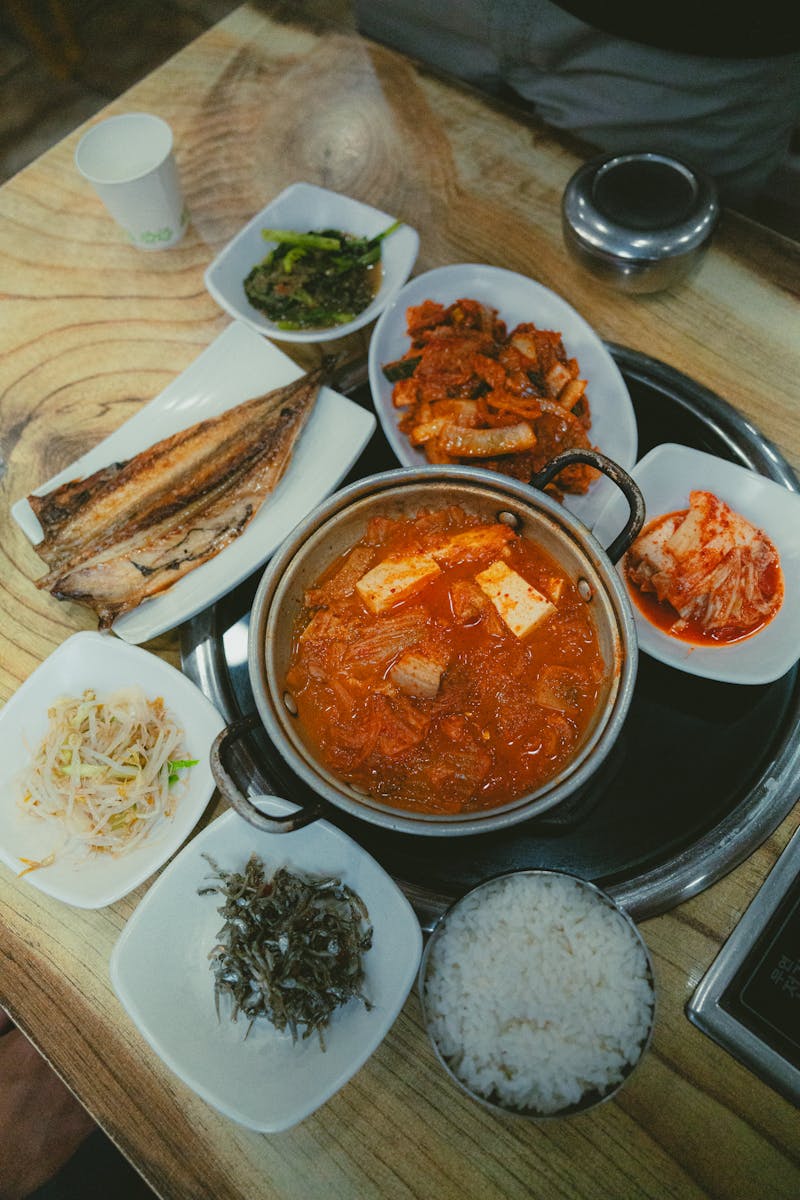 The art of Korean cuisine—where every color tells a story
Understanding Gujeolpan: Nine Treasures on One Plate
The name tells you everything. Gu (구) means nine. Jeol (절) means section. Pan (판) means platter.
Nine sections. One destiny.
Gujeolpan is served in a distinctive octagonal wooden or lacquered box divided into nine compartments. The center holds miljeonbyeong—delicate wheat flour crepes so thin you can see through them. The eight surrounding sections contain meticulously prepared fillings, each representing a color, a season, a direction, and an element of the universe.
The Philosophy of Color
In Korean royal cuisine, nothing is accidental. The five cardinal colors—obangsaek (오방색)—carry deep meaning:
| Color | Korean | Element | Direction | Meaning |
|---|---|---|---|---|
| White | 백 (baek) | Metal | West | Purity, truth |
| Black | 흑 (heuk) | Water | North | Wisdom, depth |
| Blue/Green | 청 (cheong) | Wood | East | Growth, vitality |
| Red | 적 (jeok) | Fire | South | Passion, energy |
| Yellow | 황 (hwang) | Earth | Center | Royalty, stability |
When you eat gujeolpan, you’re not just having dinner. You’re consuming cosmic balance.
The Traditional Eight Fillings
While modern interpretations vary, the classic gujeolpan follows this arrangement:
1. Beef (소고기) - Brown
Thinly sliced sirloin, seasoned with soy sauce, sesame oil, and garlic, then stir-fried until tender. Represents strength and prosperity.
2. Shiitake Mushrooms (표고버섯) - Dark Brown/Black
Sliced and sautéed with soy sauce. The earthy flavor represents grounding and wisdom.
3. Carrots (당근) - Orange
Julienned and lightly stir-fried. Brings sweetness and the warmth of fire.
4. Cucumber (오이) - Green
Seeded, salted to remove moisture, then quickly sautéed. Represents spring and new beginnings.
5. Egg Yolk (달걀 노른자) - Yellow
Separated, cooked into a thin omelet, then cut into strips. The royal color, representing the center.
6. Egg White (달걀 흰자) - White
Same technique as yolk, providing contrast. Represents purity and metal.
7. Stone Ear Mushroom (석이버섯) - Black
A delicacy found on mountain rocks, sliced thin. Represents the mysterious depths of water.
8. Bellflower Root (도라지) - White/Pale
Blanched and seasoned. Prized for its slightly bitter, cleansing taste.
The Recipe: Jang Geum’s Royal Gujeolpan
Ingredients
For the Crepes (Miljeonbyeong)
- 1 cup all-purpose flour
- 1 cup water
- ½ teaspoon salt
- 1 egg white
- Vegetable oil for pan
For the Fillings
Beef
- 150g beef sirloin, thinly sliced
- 1 tablespoon soy sauce
- 1 teaspoon sesame oil
- 1 teaspoon sugar
- 1 clove garlic, minced
- Pepper to taste
Vegetables
- 1 medium cucumber
- 1 medium carrot
- 6 shiitake mushrooms (fresh or rehydrated dried)
- 50g bellflower root (doraji) or substitute with daikon
- 3 eggs
Seasonings
- Soy sauce
- Sesame oil
- Salt
- Vegetable oil for cooking
Garnishes
- Pine nuts
- Sesame seeds
Equipment
- 8-inch non-stick pan (or traditional crepe pan)
- Several small bowls for fillings
- Sharp knife and cutting board
- Gujeolpan serving dish (or arrange on a large round plate)
Step-by-Step Instructions
Step 1: Make the Crepes
Mix flour, water, salt, and egg white until completely smooth. The batter should be very thin—thinner than pancake batter. Let it rest for 30 minutes.
Heat a non-stick pan over low heat. Brush with minimal oil. Pour just enough batter to coat the bottom in a paper-thin layer—about 2 tablespoons. Swirl immediately.
Cook for 30-40 seconds until set but not browned. These crepes should be pale, almost white. Flip briefly, then remove to a plate.
Jang Geum’s Note: The crepe must be thin enough to see the fillings through it when wrapped. Patience is the only secret.
Stack crepes between parchment paper. You’ll need 16-20 crepes total.
Step 2: Prepare the Egg Strips
Separate yolks from whites completely—any yolk in the whites will prevent them from setting properly.
Beat whites with a pinch of salt. Heat an oiled pan over low heat. Pour whites in a thin, even layer. Cook until just set, flip briefly. Remove and cool. Repeat with yolks.
Cut both into uniform strips, about 2 inches long and ¼ inch wide.
Step 3: Prepare the Vegetables
Cucumber: Cut in half lengthwise, scoop out seeds. Slice into thin half-moons or julienne. Salt lightly and let sit 10 minutes. Squeeze out moisture. Sauté briefly in oil—just 30 seconds.
Carrots: Julienne into matchsticks. Sauté in oil with a pinch of salt until slightly softened but still crisp.
Shiitake: Remove stems. Slice caps thinly. Sauté with a splash of soy sauce and sesame oil until tender.
Bellflower Root: If using fresh, peel and tear into strips lengthwise. Blanch in boiling water for 2 minutes. Drain and sauté with salt and sesame oil.
Step 4: Prepare the Beef
Mix beef slices with soy sauce, sesame oil, sugar, garlic, and pepper. Let marinate 15 minutes.
Heat a pan over high heat. Sauté beef quickly—about 2 minutes—until just cooked through. Don’t overcook; it should remain tender.
 The elegance of Korean royal presentation—every detail matters
Step 5: Arrange the Platter
Here’s where artistry meets tradition. In a proper gujeolpan dish:
- Place folded crepes in the center compartment
- Arrange the eight fillings in the outer compartments, alternating colors for visual harmony
- Traditional arrangement places complementary colors opposite each other
If using a regular plate, arrange fillings in a circle around a central stack of crepes.
Step 6: Serve with Grace
To eat gujeolpan properly:
- Take one crepe and lay it flat
- Place small portions of desired fillings in the center
- Fold the crepe into a small packet or roll
- Eat in one or two bites
The joy is in mixing combinations—beef with cucumber, mushroom with egg, carrot with bellflower. Each bite different. Each bite harmonious.
Pro Tips from the Royal Kitchen
The Crepe Consistency
If your crepe batter is too thick, the crepes will be chewy and tear when rolling. Too thin, and they won’t hold together. The consistency should be like heavy cream—coating a spoon but running off freely.
The Color Rule
Each filling must maintain its distinct color. Don’t mix vegetables in the same pan; residual flavors and colors will muddy the presentation. Clean your pan between preparations.
The Size Matters
All fillings should be cut to similar sizes—about 2 inches long and ¼ inch wide. Uniformity is not just aesthetic; it ensures equal cooking times and balanced bites.
The Temperature Balance
Serve at room temperature. Unlike many Korean dishes served hot, gujeolpan is meant to be enjoyed slowly, contemplatively. Cold fillings on warm crepes create an unpleasant contrast.
FAQ
What does gujeolpan taste like?
Each section tastes different, which is the point. The beef brings savory umami, the vegetables add freshness and crunch, the eggs provide richness, and the mushrooms contribute earthiness. The crepe itself is neutral, allowing the fillings to shine.
Can I make gujeolpan without the special serving dish?
Absolutely. While the traditional octagonal box is beautiful, you can arrange the components on a large round plate with crepes in the center and fillings around them in small piles or in small individual bowls.
Why is gujeolpan considered royal food?
The dish requires significant preparation time and skill—each component prepared separately with precision. In the Joseon Dynasty, only the royal court had the resources (ingredients, staff, time) to create such elaborate dishes. It was literally food fit for a king.
Can I substitute ingredients?
Yes, while maintaining the color balance. Stone ear mushrooms can be replaced with black wood ear mushrooms. Bellflower root can be substituted with julienned daikon. The key is keeping the eight distinct colors and textures.
How long does it take to make gujeolpan?
Plan for 2-3 hours for a traditional version. The crepes take about 30 minutes, and each filling requires separate preparation. This is not a weeknight dinner—it’s a special occasion dish.
Is gujeolpan healthy?
Extremely. It’s mostly vegetables with small amounts of lean protein, cooked with minimal oil. The variety ensures a range of nutrients. In traditional Korean medicine, gujeolpan was considered a “complete” dish that nourished all organs.
What wine pairs with gujeolpan?
Traditional pairing would be makgeolli (Korean rice wine) or cheongju (refined rice wine). For modern pairings, try a dry Riesling or unoaked Chardonnay—something that won’t overpower the delicate flavors.
The Last Word
The king lifts a crepe from the lacquered box.
He has refused meals from the greatest cooks in the kingdom. He has sent back dishes that took days to prepare. The court waits, barely breathing.
Jang Geum kneels at the edge of the room, her head bowed, her heart hammering. She cannot see the king’s face. She can only wait.
The king places beef on the crepe. Then cucumber. Then a strip of golden egg yolk. He rolls it carefully—he has done this a thousand times before, but tonight each motion feels deliberate. Meaningful.
He eats.
Silence.
Then: “Who made this?”
“The kitchen maid Jang Geum, Your Majesty.”
Another bite. Another. The king eats three rolls before speaking again.
“Tell her,” he says quietly, “that I taste something in this dish I have not tasted in a long time.”
“What is that, Your Majesty?”
The king looks at the remaining fillings, the careful arrangement, the colors that somehow seem brighter than before.
“Care,” he says. “I taste care.”
In the corner of the royal kitchen, a young cook named Jang Geum allows herself, finally, to breathe.
Some dishes fill the stomach. Others fill the soul.
Gujeolpan, prepared with intention, can do both.
For more K-Drama culinary adventures, try our Crash Landing on You Ramyeon for comfort food with a love story, or Vincenzo’s Jjapaguri for a midnight classic.