

The chicken arrives at 11:47 PM.
Kim Bok-joo watches the delivery man disappear down the dormitory hallway, then turns to face her prize: a tower of golden-brown fried chicken, steam still rising from beneath the cardboard lid. Beside it, two cans of beer sweat in the summer humidity.
She shouldn’t be eating this. Tomorrow’s weigh-in is at 6 AM. Coach will kill her. The national team selection is three weeks away.
But Jung Joon-hyung is sitting across from her with that ridiculous grin, already reaching for a drumstick, and suddenly none of that matters.
“You’re supposed to be on a diet,” he says, mouth full.
“You’re supposed to be a supportive boyfriend,” she shoots back, grabbing the biggest piece.
This is chimaek. This is Korea at midnight. This is love.
The Religion of Chimaek
In Korea, there’s a word that foreigners struggle to understand: 치맥 (chimaek). It’s a portmanteau of chicken (치킨) and maekju (맥주, beer). But calling chimaek “chicken and beer” is like calling the Sistine Chapel “a painted ceiling.”
Chimaek is ritual. It’s the reward after a brutal day. It’s the excuse to stay up too late with friends. It’s ordering delivery at midnight because someone mentioned they were hungry, and suddenly everyone is.
Weightlifting Fairy Kim Bok-joo (2016) captured this perfectly. The drama follows a young weightlifter navigating the impossible balance between athletic ambition and being a normal twenty-something who just wants to eat fried chicken with her crush.
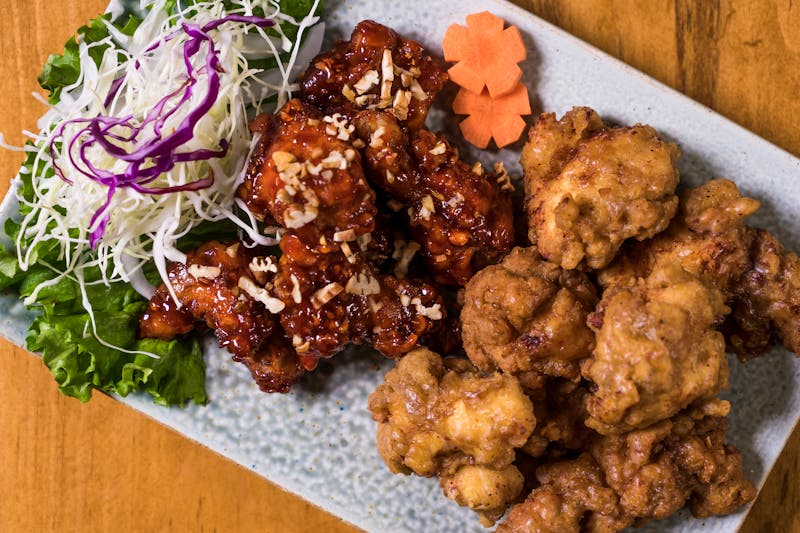 The golden standard—Korean fried chicken in all its crispy glory
What Makes Korean Fried Chicken Different?
Korean Fried Chicken (KFC—the real KFC, locals joke) isn’t just fried chicken. It’s an engineering marvel.
The Double-Fry Technique
The secret to that glass-like crunch lies in frying the chicken twice. The first fry cooks the meat through and renders the fat. The second fry—after a rest period—creates that distinctive shatter when you bite through.
| Fry | Temperature | Time | Purpose |
|---|---|---|---|
| First | 160°C (320°F) | 10-12 min | Cook through, render fat |
| Rest | Room temp | 5-10 min | Moisture redistributes |
| Second | 180°C (350°F) | 3-4 min | Create crispy shell |
The Coating Question
Korean fried chicken uses a thin, light batter—usually just potato starch or a rice flour blend. This isn’t American Southern fried chicken with its thick, craggly crust. Korean style is all about the crunch-to-meat ratio: maximum crisp, minimum bulk.
The Sauce Spectrum
Korean chicken shops typically offer three styles:
- 후라이드 (Huraideu): Plain fried, seasoned only with salt. Purists swear by it.
- 양념 (Yangnyeom): Glazed in sweet-spicy gochujang sauce. The crowd favorite.
- 간장 (Ganjang): Soy-garlic glaze. Sweet, savory, addictive.
Most Koreans order 반반 (banban)—half and half—because choosing is impossible.
The Recipe: Bok-joo’s Midnight Chicken
Ingredients
For the Chicken
- 1 kg chicken wings or drumettes (about 2 lbs)
- 1 cup potato starch (or cornstarch)
- ½ cup rice flour
- 1 teaspoon baking powder
- 1 teaspoon salt
- ½ teaspoon white pepper
- 1 cup cold water (or cold sparkling water for extra crunch)
- Oil for frying (vegetable or peanut)
For Yangnyeom Sauce
- 3 tablespoons gochujang (Korean red pepper paste)
- 2 tablespoons ketchup
- 2 tablespoons honey or rice syrup
- 1 tablespoon soy sauce
- 1 tablespoon rice vinegar
- 2 cloves garlic, minced
- 1 teaspoon sesame oil
- 1 teaspoon gochugaru (Korean red pepper flakes) - optional
For Soy-Garlic Sauce
- 3 tablespoons soy sauce
- 2 tablespoons honey
- 1 tablespoon brown sugar
- 4 cloves garlic, minced
- 1 tablespoon rice wine or mirin
- 1 teaspoon sesame oil
Garnishes
- Sesame seeds
- Sliced green onions
- Pickled radish (chicken mu)
Equipment
- Deep pot or Dutch oven
- Cooking thermometer (crucial!)
- Wire rack over sheet pan
- Tongs
- Paper towels
Step-by-Step Instructions
Step 1: Prep the Chicken
Pat your chicken pieces completely dry with paper towels. This is non-negotiable. Moisture is the enemy of crispy skin.
Bok-joo’s Note: I learned this the hard way. Wet chicken = soggy skin = sad athlete.
Let the chicken sit at room temperature for 20-30 minutes before frying. Cold chicken drops the oil temperature too dramatically.
Step 2: Make the Batter
In a large bowl, whisk together:
- Potato starch
- Rice flour
- Baking powder
- Salt
- White pepper
Add cold water gradually, whisking until you have a thin, smooth batter about the consistency of heavy cream. Don’t overmix—some small lumps are fine.
Pro Tip: Using ice-cold sparkling water creates an even lighter, crispier coating. The carbonation adds tiny air pockets.
Step 3: First Fry
Heat oil to 160°C (320°F). Use enough oil to submerge the chicken pieces completely—usually about 2-3 inches deep.
Dip each piece in batter, let excess drip off, and carefully lower into the oil. Don’t crowd the pot—work in batches of 4-5 pieces.
Fry for 10-12 minutes, turning occasionally, until the chicken is cooked through and light golden. The internal temperature should reach 74°C (165°F).
Transfer to a wire rack. Not paper towels for this step—you want air circulation.
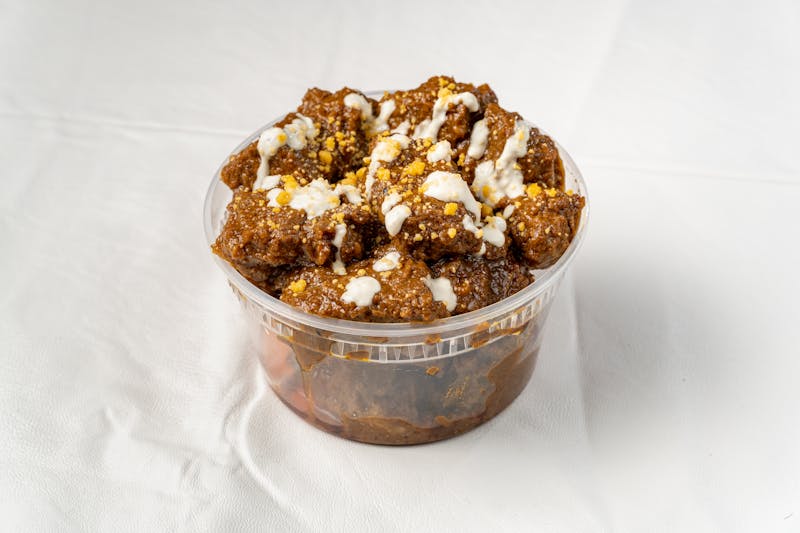 Yangnyeom chicken—the sweet-spicy glaze that launched a thousand cravings
Step 4: The Rest (Don’t Skip This!)
Let the chicken rest for 5-10 minutes. This is the magic window. The residual moisture redistributes, and when you fry again, the exterior crisps up without the interior drying out.
Use this time to make your sauce.
Step 5: Make the Sauce
For Yangnyeom: Combine all sauce ingredients in a small saucepan. Heat over medium, stirring until the sugar dissolves and the sauce thickens slightly (about 3-4 minutes). Keep warm.
For Soy-Garlic: Same process—combine, heat, stir until glossy and slightly reduced.
Step 6: Second Fry
Increase oil temperature to 180°C (350°F).
Return the rested chicken to the hot oil in batches. Fry for 3-4 minutes until deeply golden and crackling crispy.
This is when the magic happens. You’ll hear the chicken sing—a high-pitched sizzle that means the moisture is escaping and the crust is setting.
Step 7: Sauce and Serve
For sauced chicken: Toss hot chicken immediately in warm sauce. Work quickly—the sauce adheres best to hot chicken.
For plain (huraideu): Sprinkle with fine salt while still hot.
Garnish with sesame seeds and green onions. Serve immediately with pickled radish.
Pro Tips from Korean Chicken Masters
The Temperature Truth
Invest in a proper cooking thermometer. Guessing oil temperature is how you end up with greasy, soggy chicken. Every degree matters.
The Batch Wisdom
Never fry more than your pot can handle. Adding too much chicken at once drops the temperature dramatically, leading to oil-logged disasters.
The Freshness Factor
Korean fried chicken doesn’t wait. Unlike American fried chicken, which can sit for a while, Korean-style chicken’s thin crispy coating turns soft within 20-30 minutes. Order it, eat it, don’t save it.
The Sauce Timing
If making sauced chicken, toss it immediately after the second fry. The residual heat helps the sauce caramelize slightly onto the crust. Waiting even five minutes changes everything.
FAQ
What’s the difference between Korean and American fried chicken?
The coating and technique. American fried chicken uses a thick flour-based breading and single fry. Korean chicken uses a thin starch-based batter and double fry, resulting in a lighter, crunchier exterior that stays crispy longer (at least in theory—it never lasts long enough to test).
Why is Korean fried chicken so crispy?
Three reasons: potato starch (creates a glassier coating than flour), double frying (removes more moisture), and thin batter (less coating to get soggy). It’s food science perfected over decades of late-night cravings.
Can I make Korean fried chicken in an air fryer?
You can, but it won’t be the same. Air fryers can achieve decent crispiness, but the characteristic crunch of double-fried Korean chicken requires actual oil immersion. For authenticity, fry the traditional way.
What beer pairs best with Korean fried chicken?
Traditionally, Korean lagers like Cass, Hite, or Terra. They’re light, crisp, and refreshing—designed to cut through the richness of fried food. But honestly? Any cold beer works. The pairing is more about temperature and refreshment than complex flavor profiles.
How do Korean chicken shops keep their chicken so crispy?
They fry in small batches, use high-quality oil changed frequently, and serve immediately. There’s no holding period. When you order delivery in Korea, the chicken is fried right before dispatch.
Is chimaek only a late-night thing?
Traditionally yes—it’s associated with ya-shik (야식, late-night eating). But modern Korean chicken shops operate all day. Still, there’s something about chicken at midnight that hits different.
Why is it called “Korean Fried Chicken” and not just fried chicken?
The term emerged as Korean chicken shops expanded globally in the 2010s, needing to differentiate from American-style fried chicken. In Korea, they just call it 치킨 (chicken)—the “fried” is implied.
The Last Word
It’s 1:23 AM now. The chicken box is empty except for a few sauce-streaked bones. The beer cans have been crushed and stacked into a tiny aluminum tower.
Bok-joo’s fingers are sticky with yangnyeom sauce. Tomorrow’s weigh-in feels very far away. Joon-hyung has fallen asleep against the wall, one hand still resting near the last drumstick like he’s protecting it from invisible threats.
She should wake him. She should clean up. She should definitely not be smiling this hard at a sleeping boy covered in fried chicken crumbs.
But here’s the thing about chimaek: it’s never really about the chicken.
It’s about the friend who orders extra pickled radish because they know you like it. It’s about conversations that start at 11 PM and somehow reach 2 AM. It’s about someone choosing to spend their midnight with you, sharing something delicious, saying without words: this moment matters.
Bok-joo reaches for her phone to set an alarm for 5:30 AM. Coach will probably notice the sodium bloat. The scale will probably be unkind.
But looking at the empty box, the crushed cans, the sleeping boy—she finds she doesn’t mind at all.
Some victories can’t be measured in kilograms.
Craving more K-Drama comfort food? Try our Crash Landing on You Ramyeon for another late-night classic, or explore Vincenzo’s Jjapaguri—proof that the best meals come after midnight.